Interlude. Why Drugs Came First
 illustration
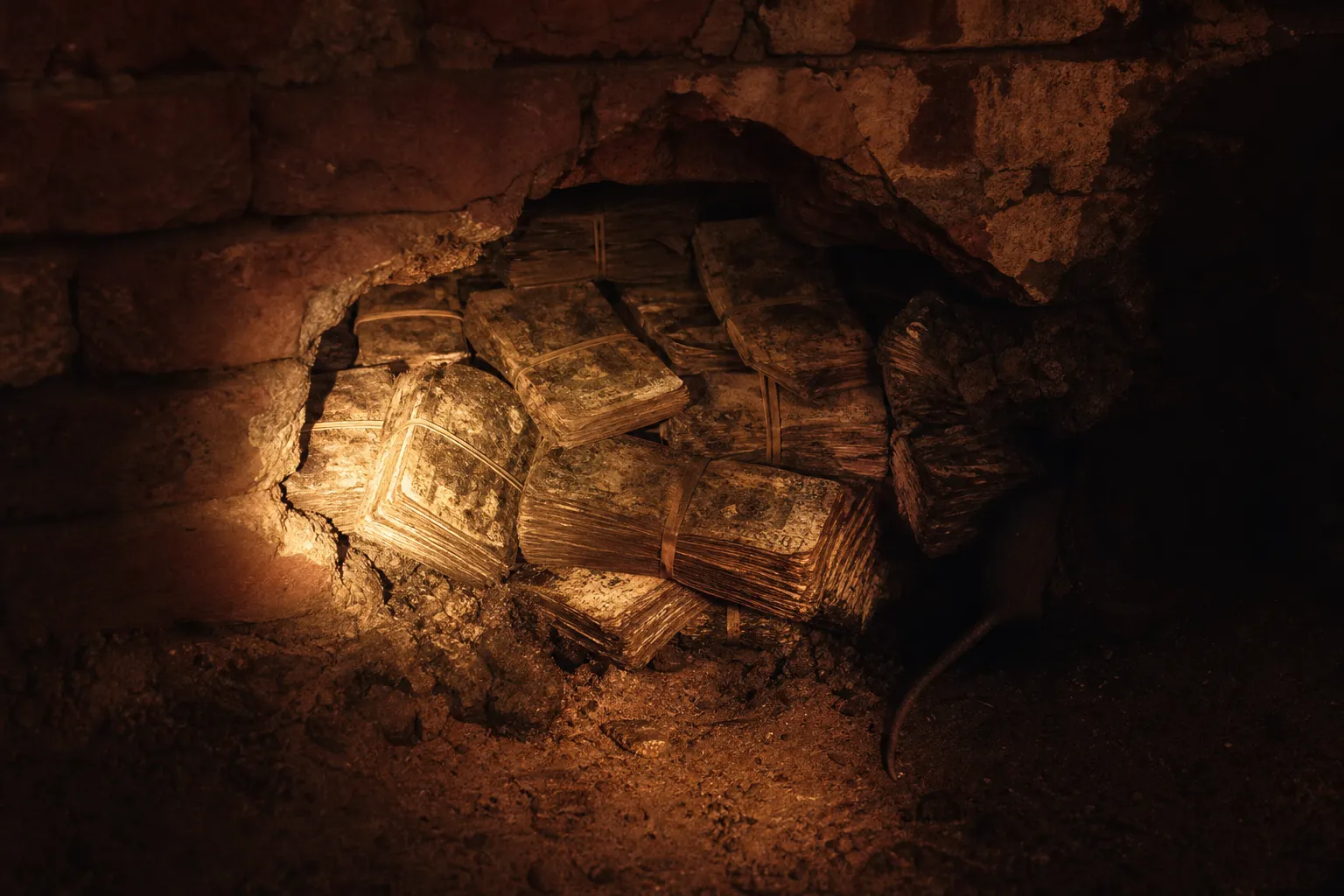
Roberto Escobar, Pablo’s brother and the chief accountant of the Medellín cartel, recalled in his book that every month the cartel spent about $2,500 on rubber bands alone, used to bind stacks of banknotes. About 10 percent of the cash went missing every year. Money buried on farms and walled up inside houses rotted from damp, rats gnawed at it, and some of it was simply lost. The cartel treated these losses as an ordinary line of expenses, like gasoline.
Drug trafficking has always had one and the same problem. The money it earns cannot be put into a bank without explaining where it came from, and it cannot be explained. So for centuries this whole economy lived on cash, with its weight, its bulk, its rats and the need to keep guards by every sack. Money laundering, that is, turning cash into a bank record with a plausible history, was a profession of its own, and its services were expensive.
If you break bitcoin down into its properties and hold each one up against this problem, you get a list that reads like a technical specification written by a cartel.
A payment cannot be reversed. A bank transfer or a card payment can be disputed, and the bank will return the money if the buyer was cheated. For honest trade this is protection, for illegal trade it is a hole, because any buyer can take the money back, and the seller cannot complain to the police. A bitcoin, once sent, is gone forever.
After sign-in
The rest of the book is for signed-in readers
Sign in with INITE or create an account. It takes a minute, and the book opens right here.