09
A Mosquito's Voice in a Stadium
 archive
In his whitepaper Satoshi wrote that proof of work amounts to the principle of “one CPU, one vote.” My MacBook, which found two blocks in the summer of 2010, was such a vote, and that vote weighed roughly as much as the vote of any other participant in the network with a similar computer. Three years later the vote of an ordinary computer weighed less than the voice of a mosquito in a football stadium.
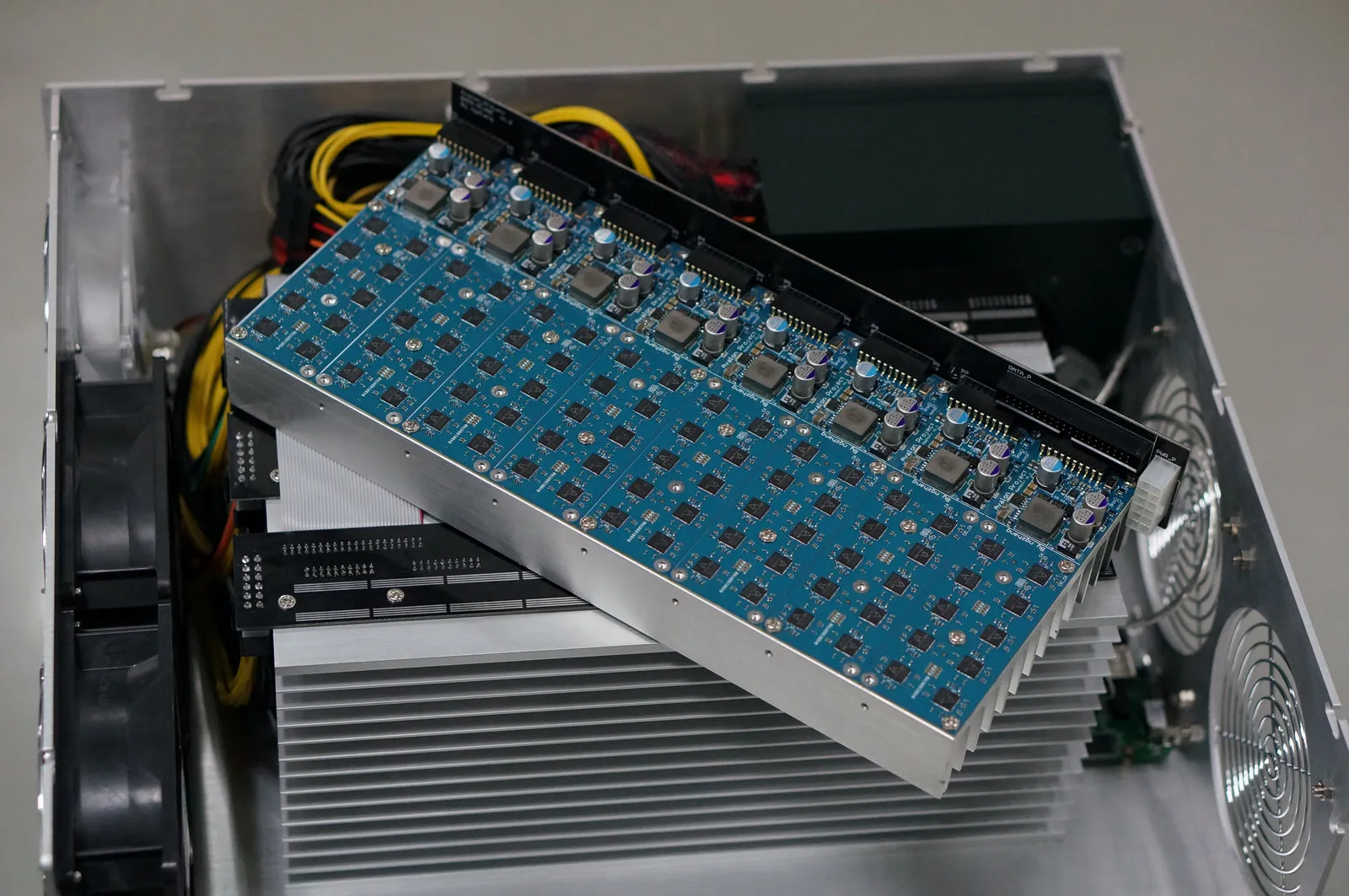
First the enthusiasts switched to graphics cards, which crunched the same problems dozens of times faster. Then came programmable chips that could be configured for one single operation. In January 2013 the Chinese firm Avalon shipped the first machines built on specialized chips, ASICs, which could do absolutely nothing except guess numbers for bitcoin, and did it thousands of times more efficiently than any graphics card. From that moment, mining bitcoins stopped being a pastime for people with a computer. It became an industry, where the winner is whoever has more machines and cheaper electricity.
 illustration
Beijing learned to build the machines better than anyone. In 2013 Jihan Wu and Micree Zhan founded Bitmain and released the first Antminer, and within a few years their firm was selling most of the world’s mining machines. Bitmain itself, meanwhile, mined bitcoins in its own data centers and ran one of the largest pools, the associations of miners who combine their computing power and split the reward. The firm sold machines to the participants in the race and at the same time took part in the race itself.
After sign-in
The rest of the book is for signed-in readers
Sign in with INITE or create an account. It takes a minute, and the book opens right here.