04
Ten Thousand for a Pizza
 archive
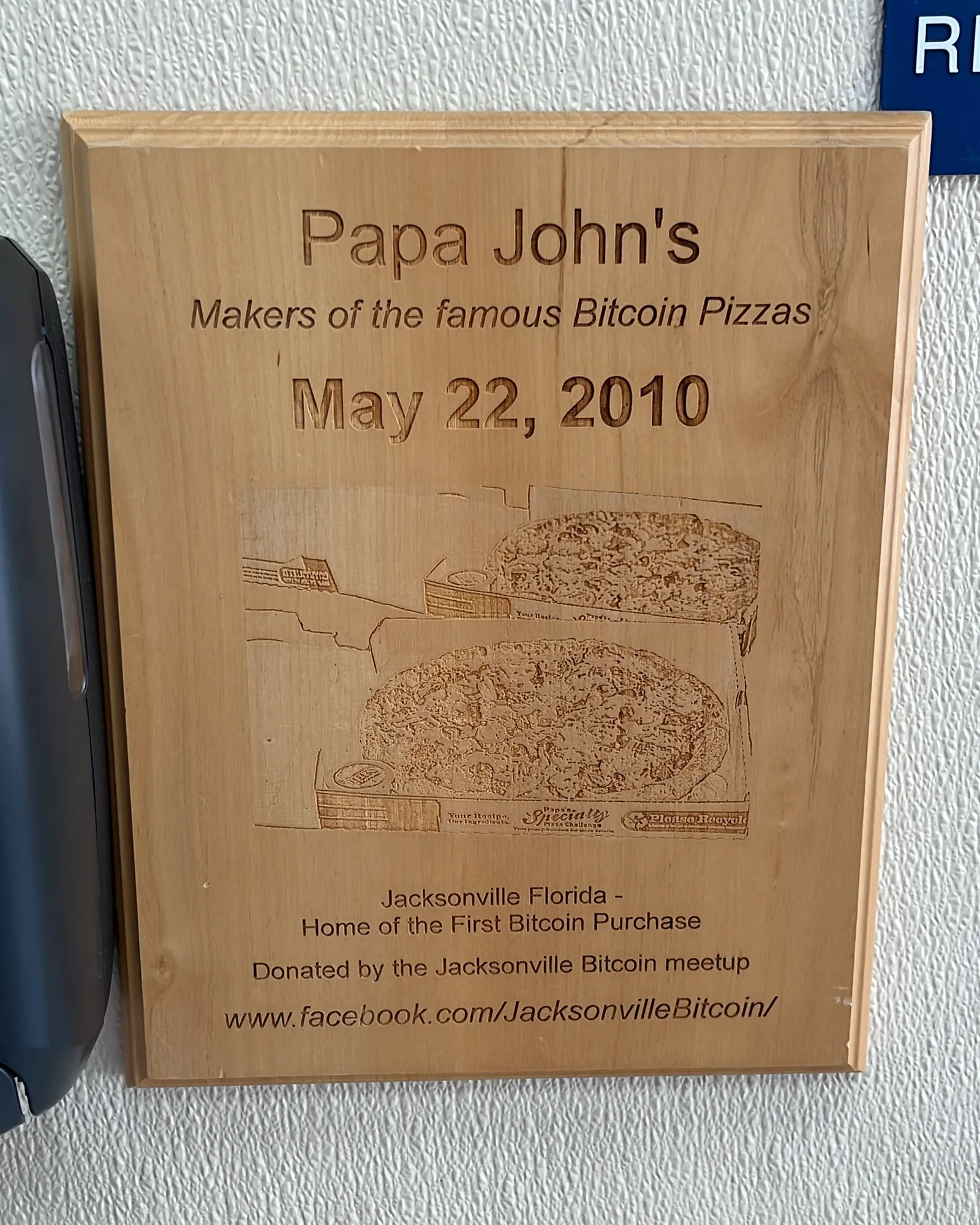
In May 2010 a programmer from Jacksonville, Florida, named Laszlo Hanyecz wrote on the bitcoin forum that he would pay 10,000 coins for two large pizzas. You could bake them yourself or order them from a pizzeria; the main thing was that the pizza be delivered to his home and that it have plenty of toppings. For four days nobody took him up on it. Then a nineteen-year-old student from California who went by the nickname jercos on the forum ordered Hanyecz two pizzas from Papa John’s with his own money, for about $25, and received 10,000 bitcoins in return. Hanyecz posted photos on the forum of the boxes and of his daughter reaching for a slice.
This deal is usually considered the first real-world purchase made with bitcoins. Papa John’s, meanwhile, never saw a single bitcoin. The student paid the pizzeria in ordinary dollars, through the very financial system bitcoin promised to rid the world of, and Satoshi’s network merely moved 10,000 coins from one wallet to another as settlement for that payment. The first purchase with the new middleman-free money went through a middleman, and in that sense it predicted the next decade and a half more accurately than any whitepaper. Hanyecz, however, liked it so much that he repeated the order several more times and, by his own count, ate his way through about 100,000 bitcoins that summer.
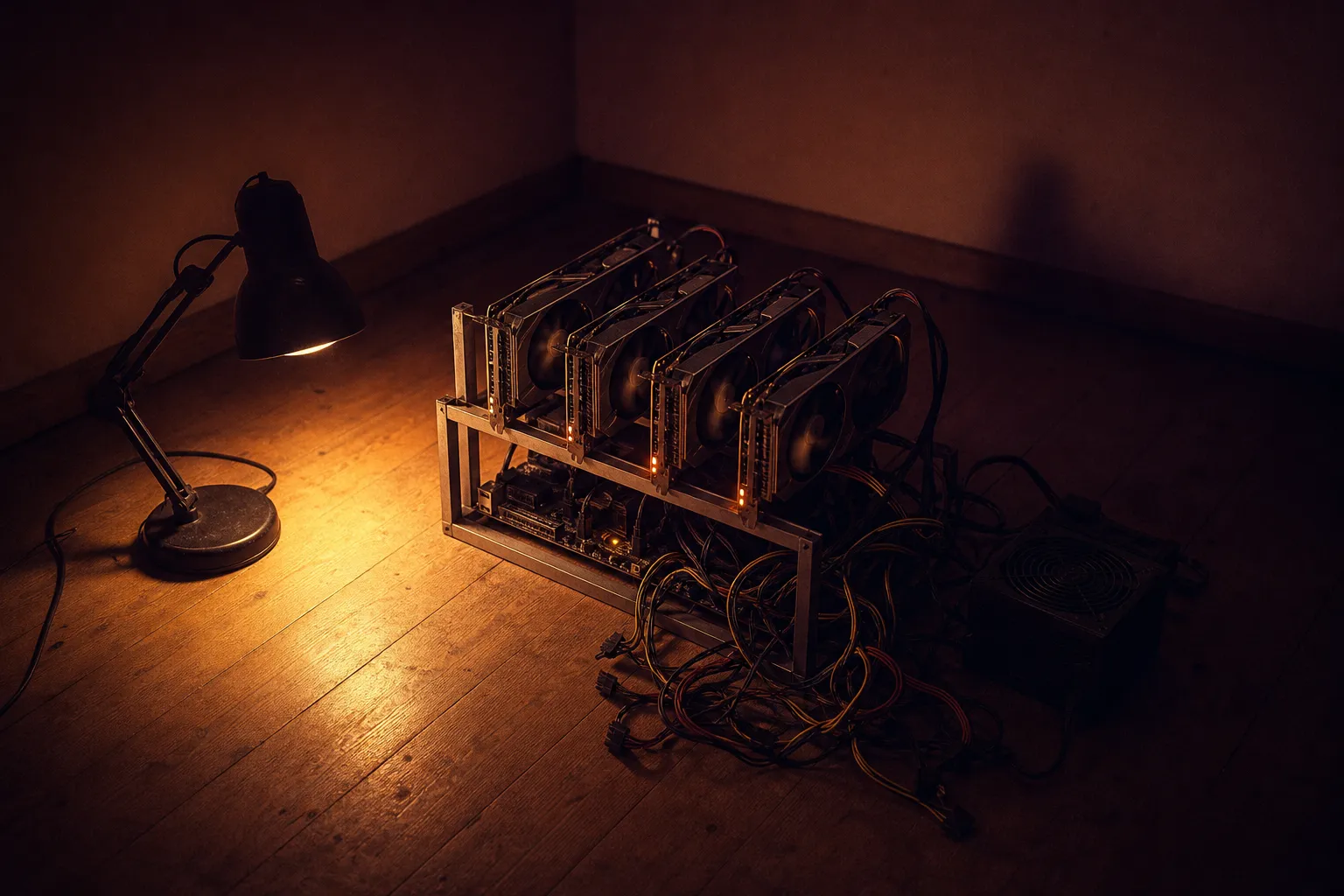
Ten thousand bitcoins were not such a big fortune for him. Two weeks before the pizza, Hanyecz had posted on the forum a program that mined bitcoins on a Mac’s graphics card instead of the processor, and the graphics card computed dozens of times faster. Satoshi wrote him an email and gently asked him not to rush. The main lure for newcomers, he explained, was that anyone with a computer could generate a few free coins for themselves, and graphics cards would prematurely hand that opportunity over to owners of expensive hardware alone.
In June the developer Gavin Andresen opened the first bitcoin faucet, a website that gave away five coins to every visitor just like that, so that people could try out how it worked. At launch he put 1,100 bitcoins into the faucet. On the eleventh of July the new version of the program was written up on Slashdot, then the main news site for programmers, and thousands of newcomers came to the forum. Three days later the post on Habr came out.
 illustration
I was one of those people with a computer that Satoshi was counting on. My MacBook computed on its processor, with no graphics card at all, and its 100 coins were worth a few cents apiece on the Mt.Gox exchange, which opened a few days after the post.
The window my MacBook had slipped through was closing fast. By the end of 2010 enthusiasts had moved en masse to graphics cards, the difficulty of the puzzle had grown many times over, and an ordinary laptop could hum for months without finding a single block. Satoshi’s dream that anyone with a computer could mine coins lived for about a year.
On the fifteenth of August 2010, block number 74,638 contained a transaction that created 184 billion bitcoins out of nothing, almost nine thousand times more than could ever exist under the rules. Someone had found an overflow bug in the program. The sum of the transaction’s two huge outputs did not fit into the cell allotted to it, wrapped around to zero, and the program concluded that everything added up.
The bug was noticed within a few hours. Less than five hours after that, Satoshi and other developers released a fixed version that rejected such transactions and asked everyone to install it. Participants upgraded, the network began rebuilding the chain from the block before the bug, and in less than a day the new chain overtook the old one. The 184 billion coins vanished.
They did the right thing, otherwise bitcoin would have ended in 2010. But this story already contained everything that would later be bashfully skirted around in conversations about code that is its own law. When the code made a mistake, people chose the correct history. A few developers decided which version of the record was the real one, and the network agreed with them.
In February 2011 bitcoin reached parity with the dollar for the first time. In June, after an article about Silk Road, it climbed to almost $32, and on the nineteenth of June someone hacked Mt.Gox and crashed the price on the exchange to a cent per coin.
I remembered my 100 bitcoins when the price shot up to thirty. By then I had already upgraded my Mac, and the wallet survived only because I had made a backup of my profile beforehand. While I was digging it out, the price was already falling, and I sold everything at $10. By the end of the year bitcoin was worth $2, and the sale looked like a lucky one. I made my first thousand dollars in crypto by accident and without understanding what I was holding, that is, the same way millions of people would later make and lose money. At the peak in the autumn of 2025 those 100 coins would have been worth more than $12 million.
In interviews Hanyecz repeated many times that he did not regret his pizza. Every year on the twenty-second of May the crypto community celebrates Bitcoin Pizza Day, orders pizza and recalculates how much those 10,000 coins would be worth today.