01
A Stone at the Bottom of the Sea
 archive
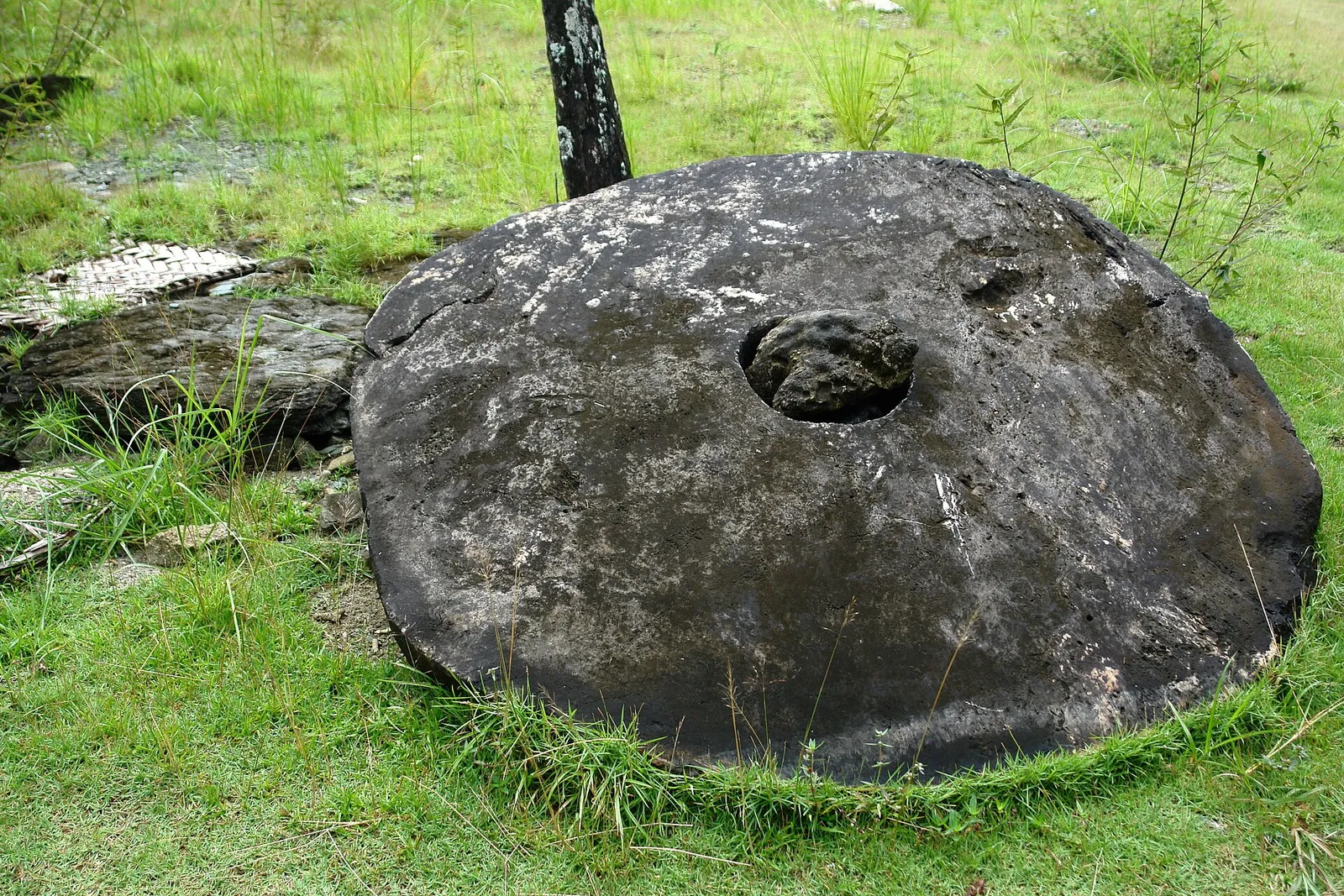
On the island of Yap in the Pacific Ocean, people paid with stones for a long time. They quarried them out of limestone on Palau, several hundred kilometres from Yap, shaped them into wheels with a hole in the middle, and brought them home in boats and on rafts across the open ocean. The largest were taller than a man. Nobody carried a stone like that anywhere. It stood by a house or by a road, and when it passed to a new owner it stayed where it was, and the whole island simply remembered that it now belonged to another family.
The American William Henry Furness visited Yap and in 1910 published a book about it, in which he told a story that everyone who writes about money has retold ever since. One family not far from the village of Dulukan was considered rich on the island, although no one living had ever laid eyes on its main stone. A storm had sunk it two or three generations before Furness arrived, while the stone was being brought from Palau. The men who had accompanied the raft came back and told everyone how huge it had been and that it had sunk through no fault of theirs. The island believed them. The stone lay on the bottom, and the family went on paying with it.
The German colonial administration, which governed Yap from 1899, figured out how to use these stones to make the chiefs repair the roads. Officials went from village to village and put marks on the stones declaring them the property of the state. Not a single stone moved an inch, but the chiefs immediately felt poor and repaired the roads, after which the marks were wiped off and the wealth returned to its owners. The marks, if the local records are to be believed, were the letters B.A., from the German name of the district office. Milton Friedman, telling this story in 1991, painted black crosses on the stones, and the crosses have lived on in the retellings ever since.
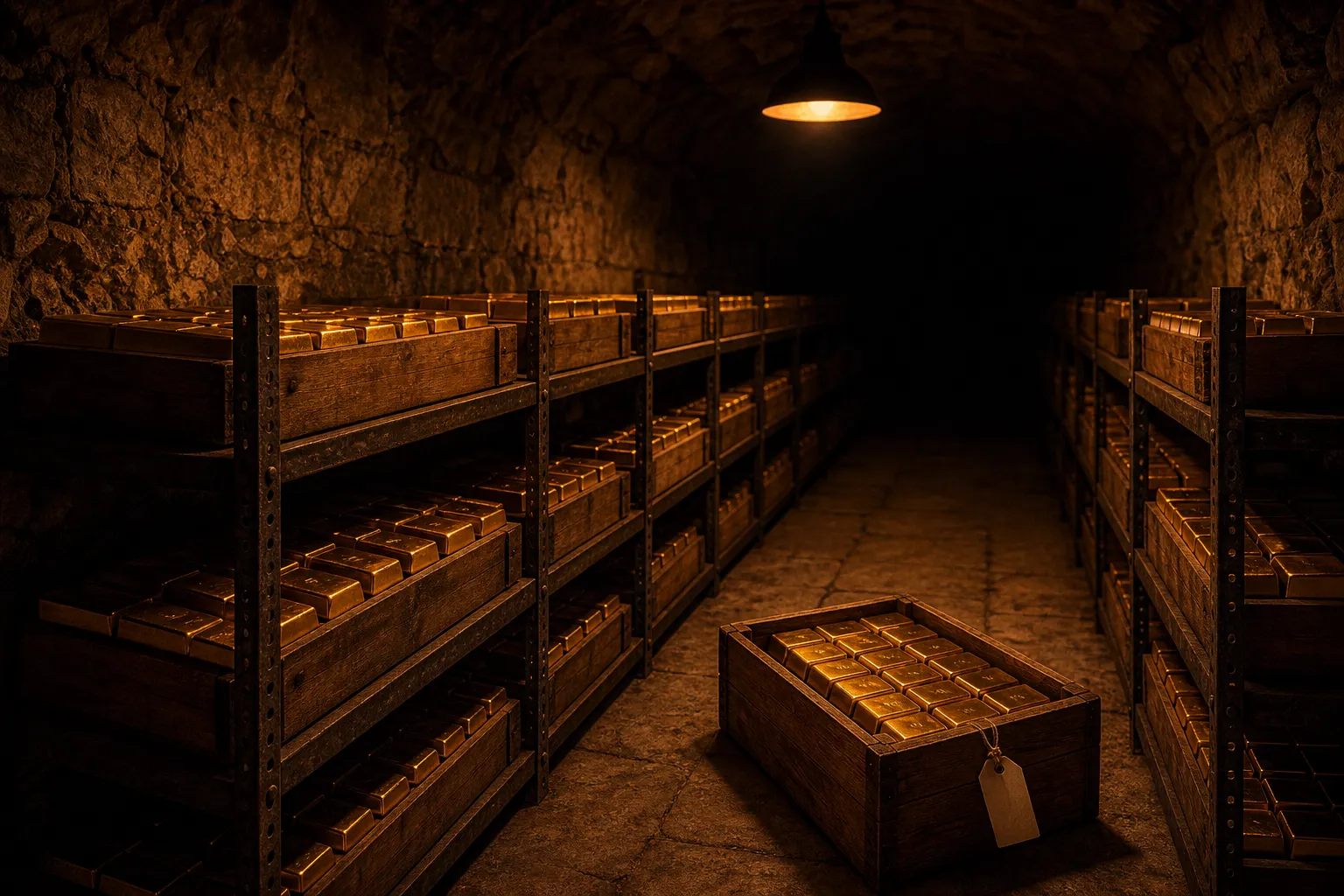
Friedman needed the story for a comparison with another vault. In 1932 the Bank of France, fearing that America would refuse to exchange dollars for gold at the old price, asked the Federal Reserve Bank of New York to convert its dollar assets into gold. The French did not ship the bars across the ocean. Employees of the New York bank went down into the vault, moved the required number of bars into separate boxes and hung a label on them saying that they were now the property of France. The newspapers wrote about a drain of American gold, and by Friedman’s account this label became one of the causes of the banking panic of 1933. The gold, meanwhile, lay exactly where it had before, in a basement in Manhattan, just like the stone of the Dulukan family at the bottom of the ocean.
A hundred years later, crypto evangelists found their ancestry in the stones of Yap and began calling the island the first blockchain in history, because there too there was no central registry and the whole island kept a shared record in its memory. Scholars of the island’s culture have long disputed this picture. The stones served for weddings, apologies, ransom and political alliances, and nobody took them to the shop to buy fish. The comparison works in one direction only. Yap shows that money can be a record that everyone recognizes. That does not make it a blockchain.
Yap does, however, have a story that suits crypto much better, and for some reason it is told less often. In the 1870s the Irish-American captain David O’Keefe settled on the island. He realized that the stones could be quarried faster. O’Keefe took islanders to Palau on his ship, gave them iron tools and brought the finished wheels back, and in exchange took copra, the dried flesh of the coconut, which he sold at a good profit in Europe. There came to be more stones on Yap, and the stones themselves got bigger. The islanders, however, valued them in their own way. A small stone cut with the old tools and brought across the ocean by canoe was valued more highly than a huge wheel brought in the hold of a foreign vessel. The price of a stone was set by the people who drowned while it was being brought, the storms it survived, and the years it took. A stone obtained easily was worth little.
A hundred and thirty years before Satoshi, the people of Yap discovered what programmers would later call proof of work. A record is worth as much as it costs to forge, and when extraction gets cheaper, the money gets cheaper too. Bitcoin would solve this problem automatically, raising the mining difficulty every two weeks so that new iron tools simply cannot exist. O’Keefe got rich, Hollywood made a film about him with Burt Lancaster called His Majesty O’Keefe, and in 1901 he vanished at sea along with his schooner, and where it lies nobody knows, just like the stone of the Dulukan family.
 archive
The English kept their shared record on willow sticks. Starting at least in the twelfth century, when someone paid a tax or lent money to the Crown, the clerks of the Exchequer took a willow tally, cut notches into it to mark the sum, and then split the stick lengthwise into two halves. One stayed with the Exchequer, the other was taken by the payer. Forging such a receipt was almost impossible, because split wood fits only its own half, with all its grain and knots. Each side kept its own copy of the record, and the copies were checked simply by laying one against the other.
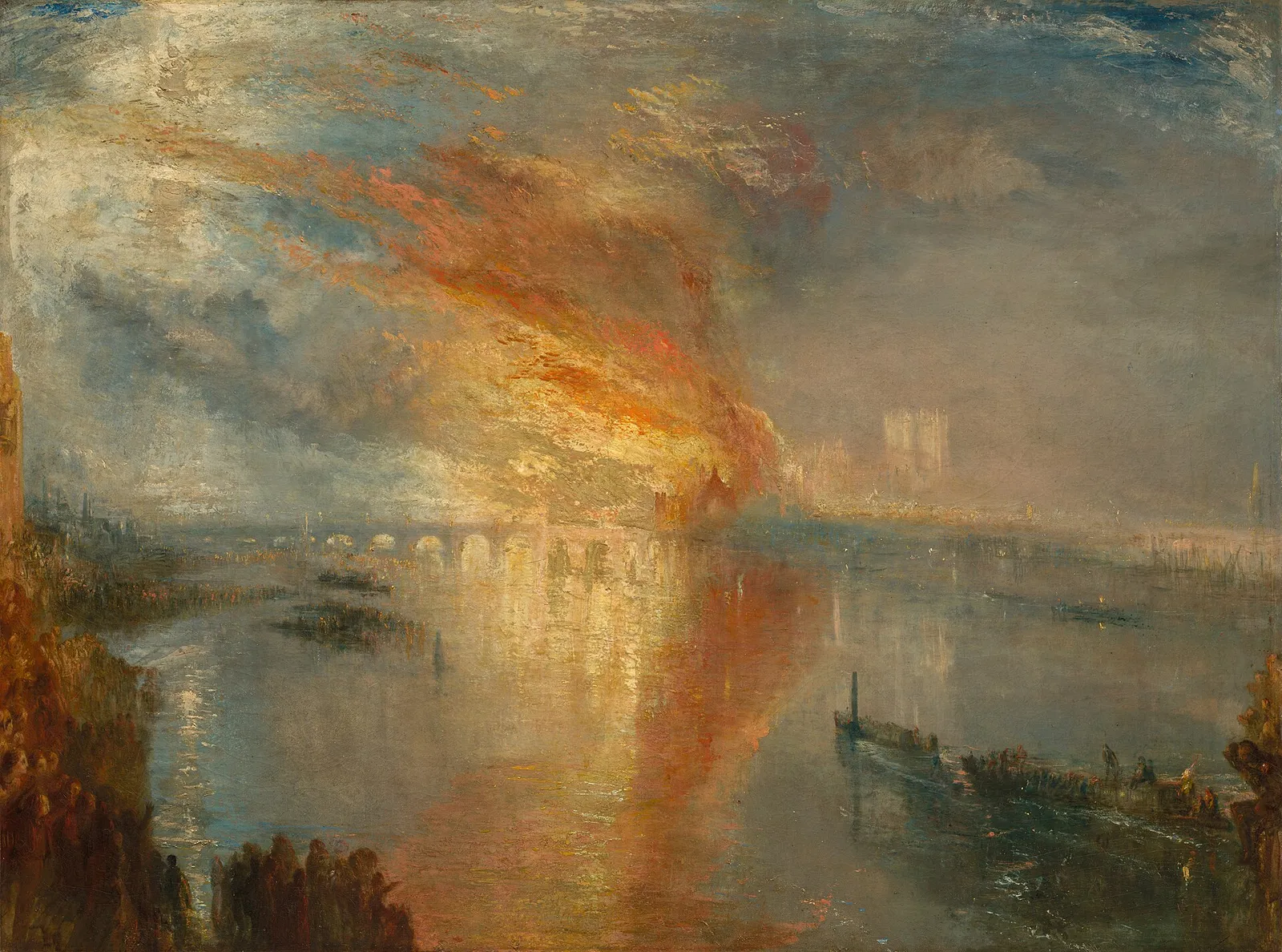
The tallies were abolished in 1826, and two cartloads of old sticks were left in the cellars of the Exchequer. In October 1834 it was decided to burn them in the stoves under the House of Lords. On the evening of the sixteenth the stoves overheated, the fire spread to the wooden panelling, and by morning only the walls of the old Palace of Westminster were left. Turner, who stood in the crowd on the bank of the Thames, later painted the fire on several canvases.
Twenty years later Charles Dickens, in a speech to a meeting of the Administrative Reform Association, mocked the Exchequer, which for centuries had clung to notches on sticks as though they were pillars of the constitution, and which, when it finally gave them up, burned them in a stove instead of handing them out as firewood to the poor of the neighbouring streets. The tallies themselves disappeared, but a word from them survived. The long half, taken by whoever had lent money to the Crown, was called the stock, and its holder was considered a stockholder. Shares are still named after a split willow stick, and there is a certain justice in this, because a share is also half of a promise, the other half of which is kept by someone else.
 illustration
Since then the record has only been losing weight. In 2014 the Bank of England, in an article for its own bulletin, calmly admitted that 97 percent of the money the British have exists in the form of bank deposits, and only 3 percent is coins and banknotes. The salary a person receives sits in an account as a line in the bank’s database. When he pays by card, no money goes anywhere. The buyer’s bank decreases the number in one line, the seller’s bank increases the number in another, and the payment system between them makes sure that both sides wrote down the same thing. The international SWIFT network, through which banks in different countries transfer billions to one another, has been passing messages since 1973, and not a single banknote has ever gone through it.
The whole construction works on one condition. Somebody has to keep the main ledger, and everyone else has to trust him, or at least have no other choice. The bank knows how much money you have because it wrote it down itself. It can also freeze your line, refuse to process a payment, report it to the tax office, or simply close down along with your money. The central bank can print as many new lines as it sees fit, and your line becomes cheaper as a result. For most people in most countries this is an acceptable price for convenience. For those the bank won’t let through the door, the price can be impossible to pay.
When, at the end of the twentieth century, money finally became a record in a computer, the record turned out to have an unpleasant feature. A digital record can be copied. A photograph, a song or a book in electronic form gets sent on endlessly, and the sender keeps it, the recipient gets an exact duplicate, and the copy cannot be told from the original, because there is no difference. With a song, this is a disaster for record companies. With money, it is the end of money. If a coin is a file, its owner can send the same file to two sellers and pay twice.
Programmers called this the double-spending problem, and for many years it had one and only one solution. You need someone in the middle who keeps a shared list and crosses out a spent coin before accepting it from the next person. That is, the same bank, only in a computer. Every digital currency that tried to do without a central bookkeeper ran into this wall, and every one that accepted him became yet another bank, answered for by the very same people one had wanted to get away from.