16
I'm Not a Freeloader, I'm a Partner
 archive
Anyone who lived in Russia in the mid-nineties remembers Lyonya Golubkov. A simple guy in a cap from the TV ads, he used his earnings from MMM to buy his wife boots, then a fur coat, then a house, and explained to his brother that he was no freeloader, he was a partner. Millions of people bought MMM shares and the tickets printed with a portrait of Sergei Mavrodi himself, and in the summer of 1994 the pyramid collapsed, leaving them with scraps of paper. Mavrodi afterwards managed to sit in the State Duma, live as a wanted man, get four and a half years for fraud in 2007 and walk free.
Lyonya was played by the Mosfilm actor Vladimir Permyakov, and the commercials were shot by the director Bakhyt Kilibayev. When the pyramid collapsed, cheated investors recognized Permyakov in the street, demanded their money from him and, by his account, once beat him up, as if a painted partner were answerable for painted shares. Seventeen years later, when Mavrodi launched a new pyramid, Permyakov appeared in its ads again and explained to a newspaper that he was almost destitute and drowning in loans. Kilibayev, meanwhile, brought to the screen a manuscript Mavrodi had written in prison, and in April 2011 the film “PiraMMMida” was released, with Alexei Serebryakov as a brilliant financier persecuted by the state. By then Mavrodi himself had also published a multi-volume novel titled “Son of Lucifer.”
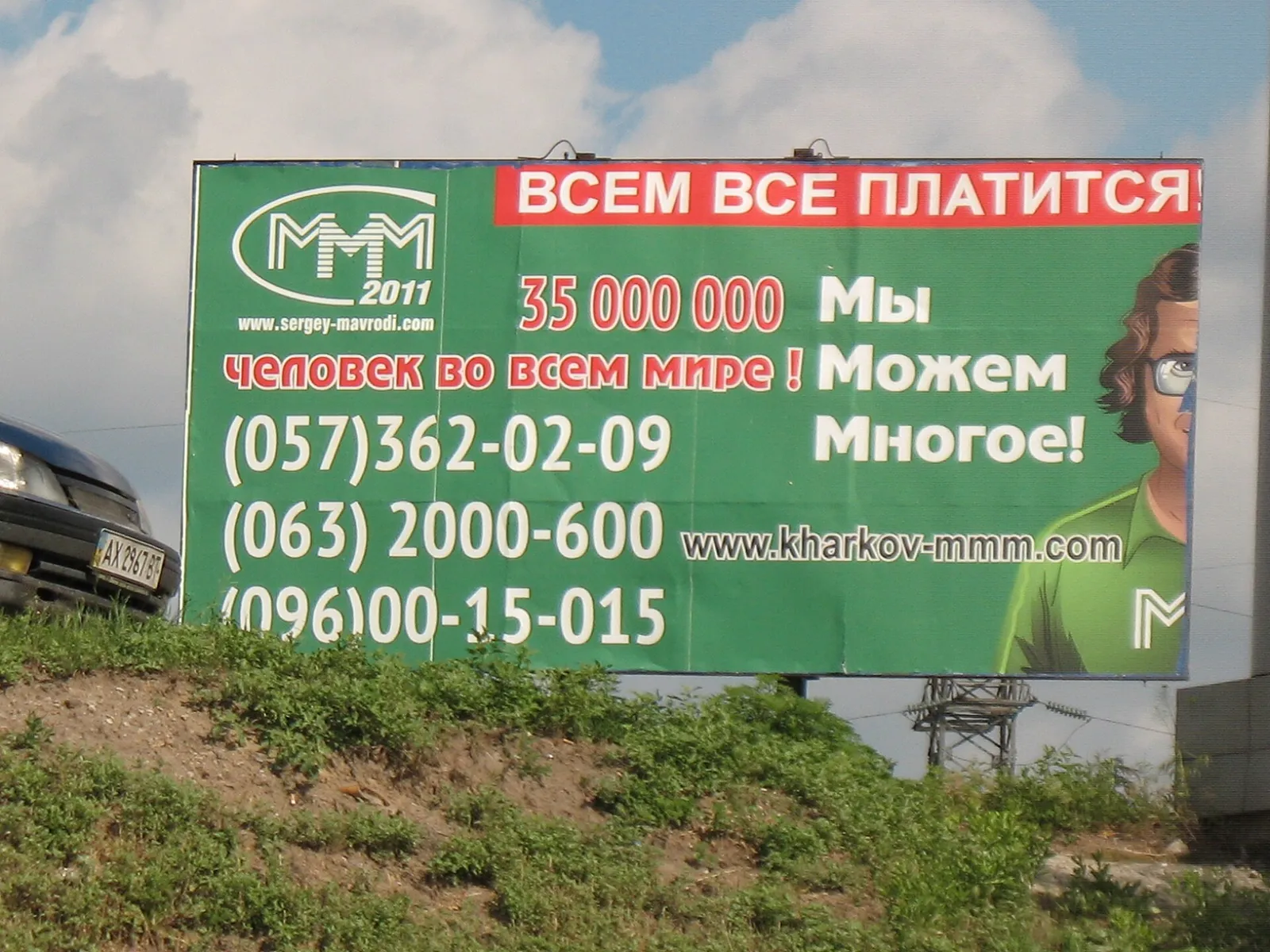
In January 2011, a month before Silk Road opened, he launched MMM-2011. The pyramid was more honest than the first in the sense that Mavrodi hardly concealed that it was a pyramid. Participants bought from it virtual scraps of paper called mavro, whose rate rose each month by an announced percentage, and paid each other directly, while the system merely matched those who wanted to put money in with those who wanted to take it out. As long as more new participants came in than old ones left, everyone was happy. In 2012 the pyramid predictably stopped paying out.
After sign-in
The rest of the book is for signed-in readers
Sign in with INITE or create an account. It takes a minute, and the book opens right here.