24
Where Will the Seniors Come From
 illustration
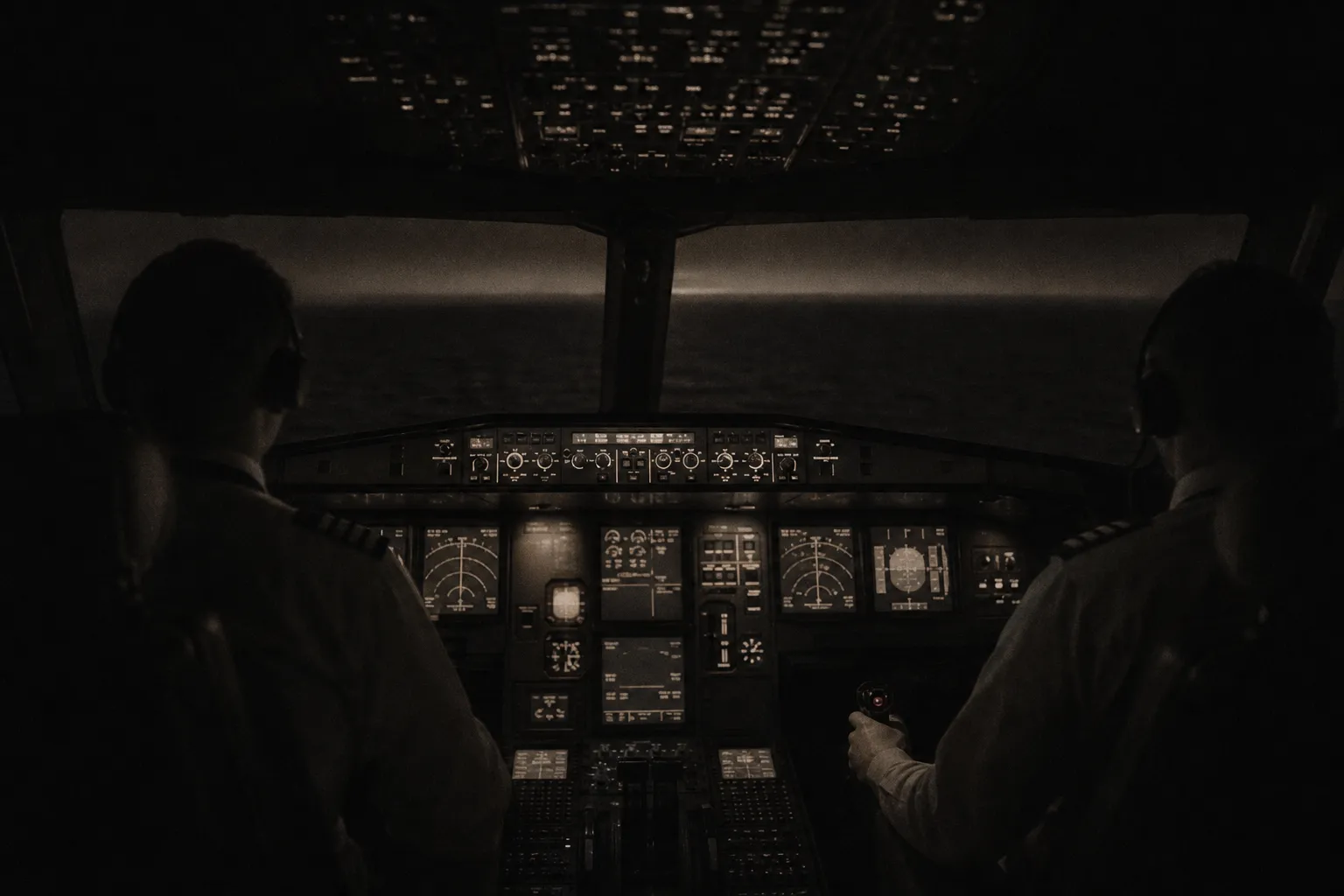
In 1997 American Airlines captain Warren Vanderburgh gave his company’s pilots a lecture that people still watch on the internet today. It was called “Children of the Magenta Line.” On the screen in the cockpit of a modern aircraft the flight computer draws a magenta line for the route, and Vanderburgh noticed that young pilots had grown used to following that line and flying the automation instead of flying the aeroplane. He went through several years of incidents and violations with his colleagues and counted that more than two thirds of them grew out of people failing to cope with the automation. His conclusion was an awkward one: the better the autopilot, the worse the pilot who has no time to practise flying by himself.
Twelve years later, on the night of the first of June 2009, over the Atlantic, the warning came true in the most terrible way. The airspeed sensors of an Air France Airbus flying from Rio to Paris iced over, the autopilot disengaged and handed control to the people. The task was difficult but solvable, and the pilot at the controls had never practised flying such a machine by hand at such an altitude. Four and a half minutes later the aircraft fell into the ocean, and two hundred and twenty-eight people died. In their final report the French investigators named crew training among the main causes, and in January 2013 the US aviation authority sent airlines a recommendation whose meaning needs no translation from bureaucratese: let pilots fly by hand more often, or they will forget how.
The same thing is happening to programming now, only without a cockpit and without black boxes. Everything I have written so far rests on the premise that AI amplifies the one who understands, and a person used to become one who understands by getting his knuckles rapped for years over his own mistakes. The autopilot now writes code better than most first officers, and the question I have been putting off for almost two hundred pages can be put off no longer: if a junior no longer has any reason to write code, where will the person come from who understands what that code will do?
The market is already answering, and the answer is unpleasant. In the summer of 2025 economists at Stanford led by Erik Brynjolfsson looked at the payroll records of millions of Americans kept by the country’s largest payroll company. In the occupations most exposed to AI, employment among twenty-two- to twenty-five-year-olds had fallen by thirteen percent since late 2022 relative to everyone else, and among young software developers by about a fifth. Experienced people in the same occupations were barely affected. The work on which beginners used to learn has been taken by machines, while the work seniors do has so far stayed with people. The authors called the paper “Canaries in the Coal Mine,” and I cannot think of a more accurate title: the first to fall off the perch are those who, being young, are closest to the gas.
After sign-in
The rest of the book is for signed-in readers
Sign in with INITE or create an account. It takes a minute, and the book opens right here.