14
From Tool to Symbiont
 archive
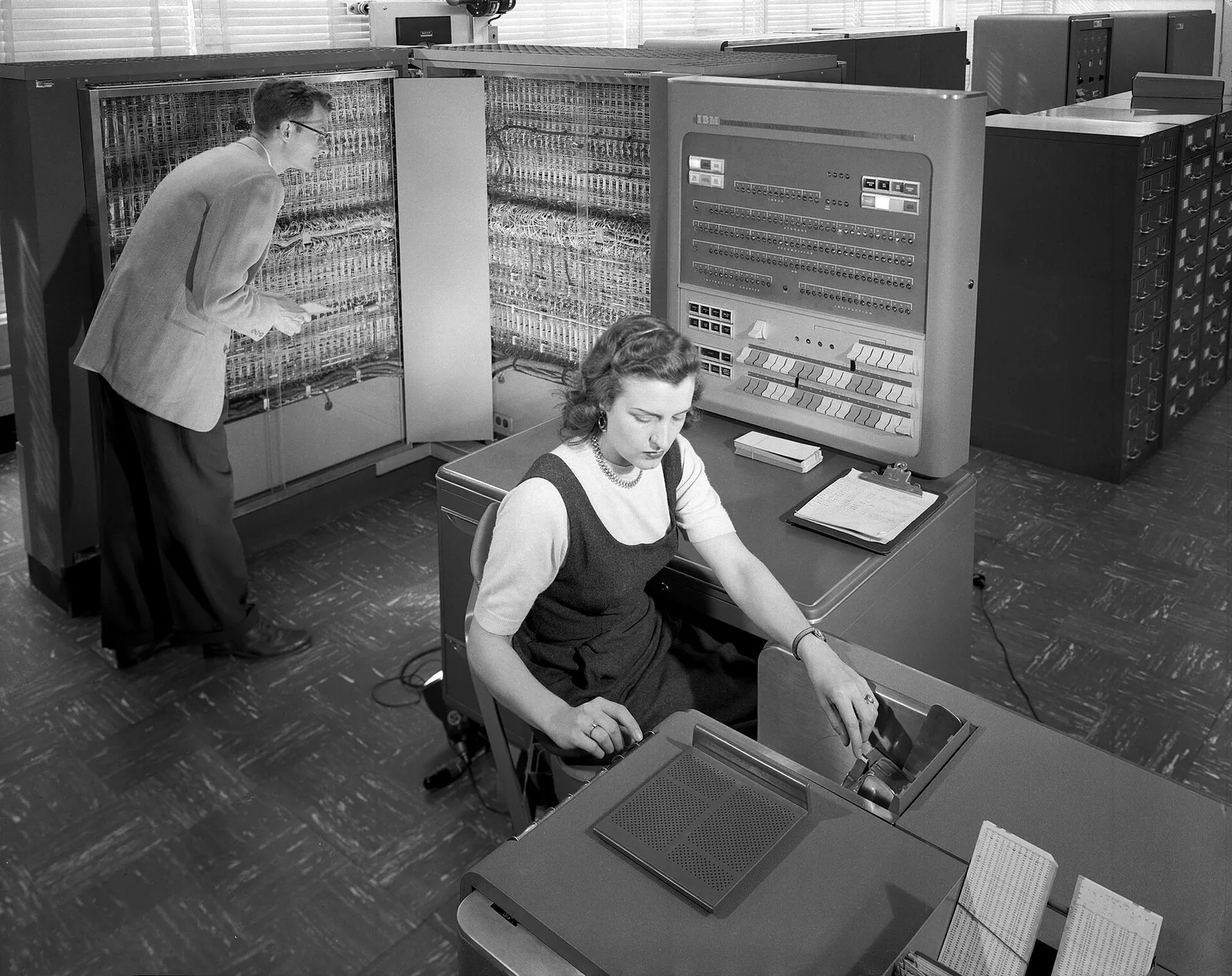
In March 1960 the American psychologist J. C. R. Licklider, who would later stand at the origins of the internet, published a paper called “Man-Computer Symbiosis.” It begins with the fig. The fig tree is pollinated by only one insect, the tiny wasp Blastophaga. The wasp’s larva lives in the ovary of the fig and feeds there, so the tree cannot reproduce without the wasp and the wasp cannot eat without the tree, and together, as Licklider wrote, they constitute not only a viable but a productive and thriving partnership. He predicted that human beings and computing machines would in time be coupled just as tightly, with the human setting the goals, formulating the hypotheses and evaluating the results, while the machine took over all the routinisable work that prepares the way for decisions.
In 1960 a computer filled a room, programs for it were punched onto cards, and the results came back the next day. Licklider’s paper read like science fiction. Today, I think, it reads like a technical specification.
If you look at how the programmer’s relationship with the machine has changed, you get a fairly even staircase. At first the computer was simply a tool that executed what was fed into it and knew nothing about who had fed it. Then came development environments, programs in which code is written and which help to write it: they highlight errors and show which actions are available for a chosen value. In 1996 Microsoft released a hint feature that completed a word the programmer had started, and programmers first despised it and then could not live without it. In June 2021 GitHub unveiled Copilot, which completed whole lines and functions, guessing the intention from a name and a comment. Then came agents, which receive a task and carry it out from start to finish: they read the project, write the code, run the checks and fix the errors.
At every step the machine did more and the person less, but the direction of the relationship stayed the same: the person was learning to use the machine. He memorised its commands, its limitations, its quirks, and the better he knew them, the more he could do. On the last step, the one we are climbing right now, the arrow begins to turn the other way, and I noticed this in myself before I read about it in other people’s papers.
After sign-in
The rest of the book is for signed-in readers
Sign in with INITE or create an account. It takes a minute, and the book opens right here.